People, Power, and Planning: Understanding Cambridge’s planning system and your role in it
Blog written by Lilly Adamo, with Gustav Nielsen and Jo Hobohm
Amidst the 15th-16th century collegiate architecture, Cambridge has a rich history, is highly innovative, and has ever changing conditions. One element that may be less thought of by the typical transient university students and even long-term residents is the role that urban planning plays in shaping the collective future of Cambridge. On March 23, 2026, the Community Design Research Lab (CDRL), in collaboration with the Centre for Research in the Arts, Social Sciences and Humanities (CRASSH), hosted a presentation series alongside discussion centred around “People, Planning, and Power: Understanding the Cambridge Planning System and Your Role in it”. The hybrid event was hosted at the Cambridge Room, enabling global engagement that was rooted in the local Cambridge Context. The presentations were timely, discussing the proposed Cambridge Development Corporation, the draft Local Plan, and the role of citizens’ assemblies in planning.
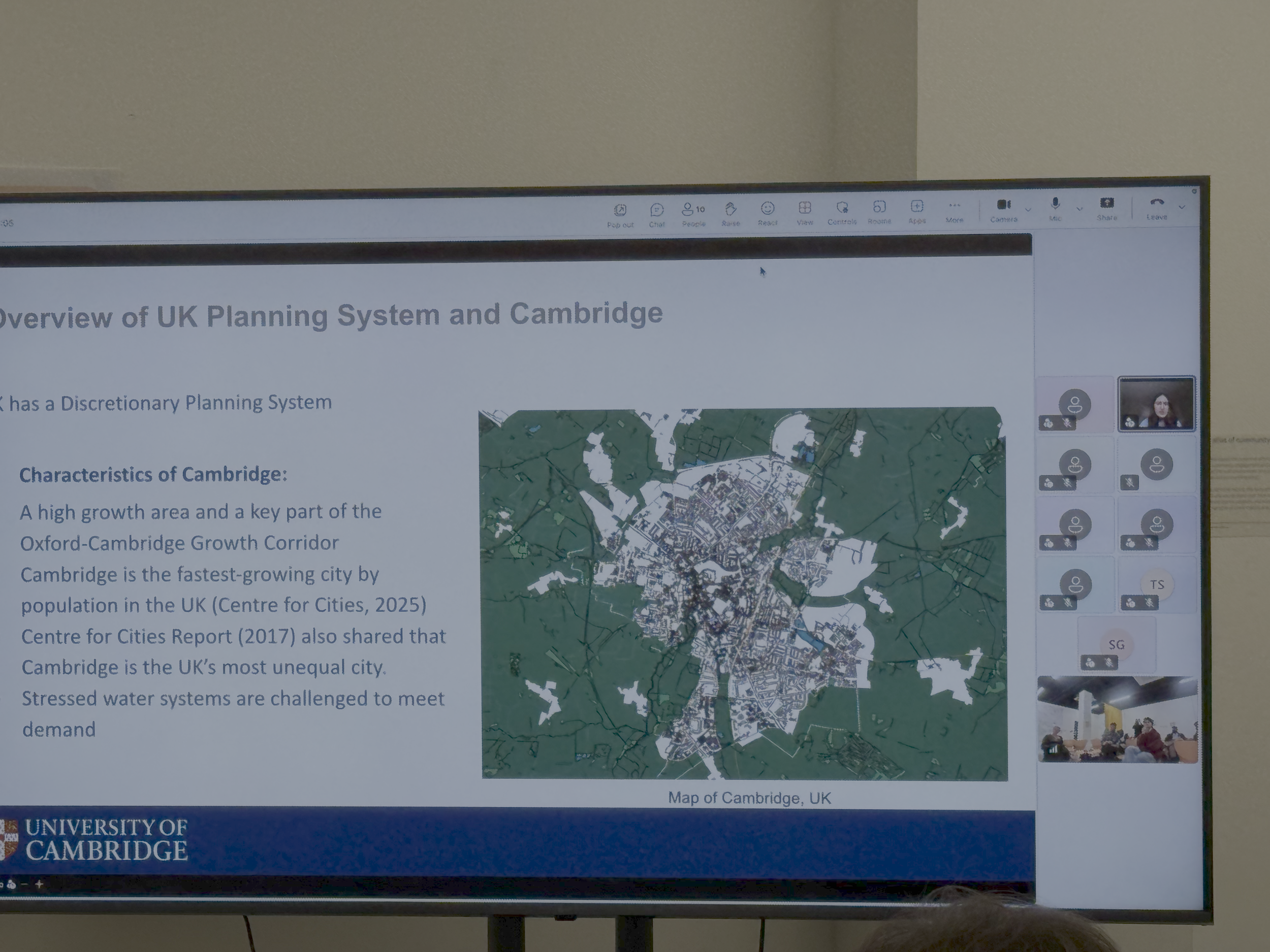
“Now is an important time to get involved because decisions made today will affect the next 5 to 10 years”- Lilly Adamo
Lilly Adamo, who recently completed her MPhil in Planning, Growth, and Regeneration, began the discussion by outlining the unique characteristics of Cambridge. Cambridge is a famously historic city and is designated as a national priority for growth. Considering current conditions, a growth agenda risks exacerbating existing inequities within the city, driving greater challenges with water availability, housing, and adequate infrastructure. There are unique environmental, social, and economic considerations that must be considered holistically and addressed concurrently. The range of stakeholders from public and private sectors as well as citizens, have varying opinions as well as multidirectional relationships that shape planning in different, and sometimes conflictual, ways. Emerging planning policy, such as the Greater Cambridge Local Plan, which was consulted on this past winter and is in the final stages before it is adopted as planning policy, allows for shifting conditions and relationships to be examined. It does so through the statutorily required times for input as well as additional opportunities for continued engagement, such as engaging young people, utilizing new technology to garner input, and other opportunities to educate and share feedback.
The conversation then moved to the role and potential of community engagement within the planning system. Four main factors were explored in the presentation that influence the extent to which community engagement is considered within planning decisions: power, timing, perception, and physical conditions and constraints. With this in mind, relationship-based innovative approaches for community engagement, including citizens’ assemblies were described. Citizen assemblies begin to address common challenges in community engagement by using a representative group and continuous, deliberative engagement, which translates into more meaningful outcomes and perceptions. There is still a predominantly top-down approach, which needs to be considered in order to truly embed citizen power within the overall planning system.
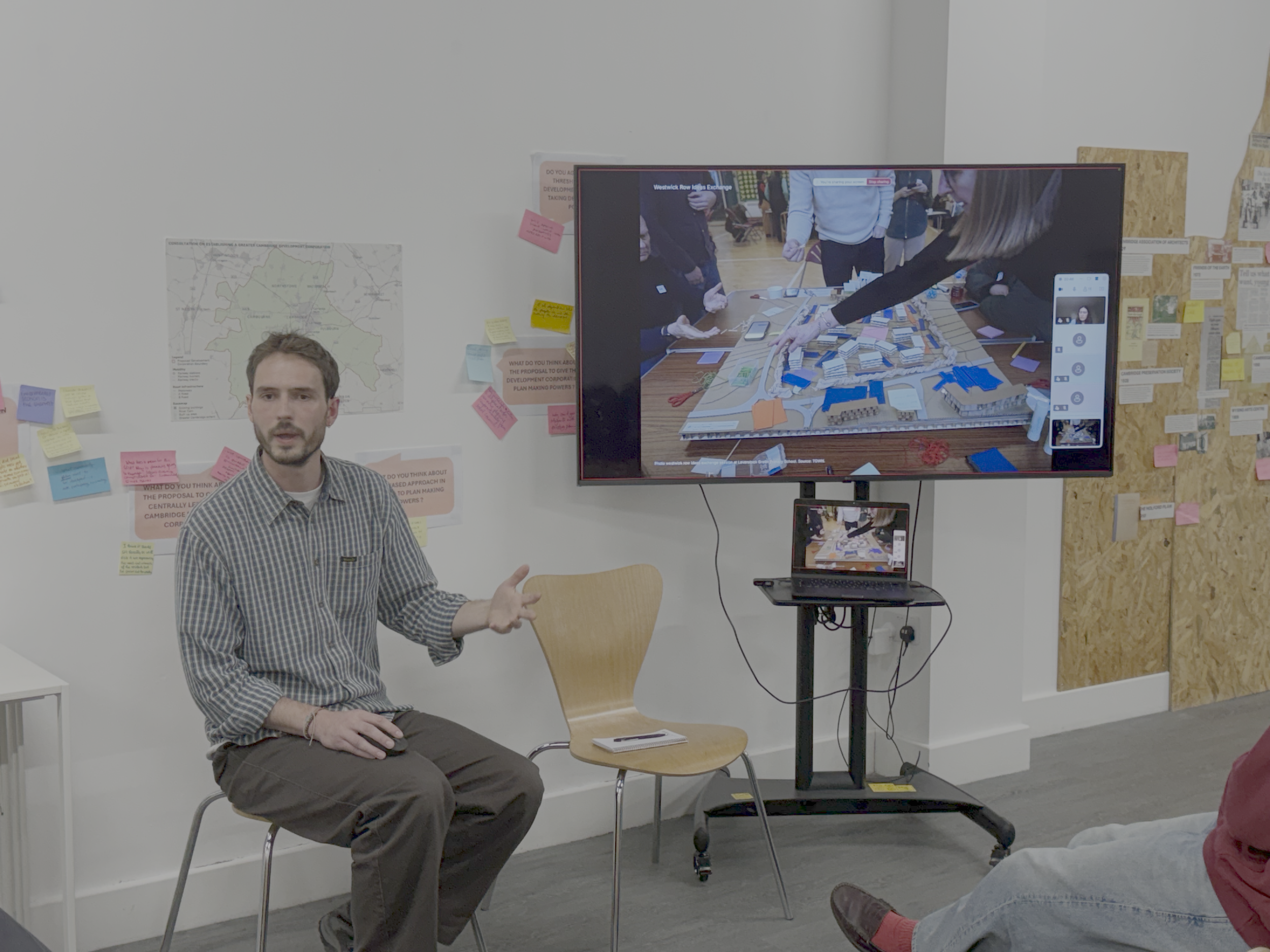
“Whether we like it or not, developers play a huge role in planning and development”- Gustav Nielsen
Gustav Nielsen, a PhD student at the University of Luxembourg, Fellow at Democracy Next, and interdisciplinary researcher, opened with a discussion about citizens' assemblies. As citizens’ assemblies proliferate in application, especially in the urban planning contexts, Nielsen described how they can be anchored within the existing planning process either during statutorily required public consultations or at the planning policy level. Citizen assemblies lend themselves well to planning decision-making because at a structural level, the civic lottery sortition process ensures that there is a representative group and integrates learning, deliberation, and decision-making to determine consensus. Citizens’ assemblies have a local and recent history, with a Greater Cambridge Citizen Assembly hosted in 2020, which had mixed results, and a modified citizens’ assemblies known as an Idea Exchange with the Hartree Project in 2022. The latter has led to other spin off projects led by TOWN, the same developer. Additionally, Nielsen touched upon his recent work with the ESCH Citizens’ Assembly in Luxembourg. Overall, emphasizing that the citizen assembly approach can create a renewed level of trust, cross-pollination with the participatory process, and foster important ties between participants.
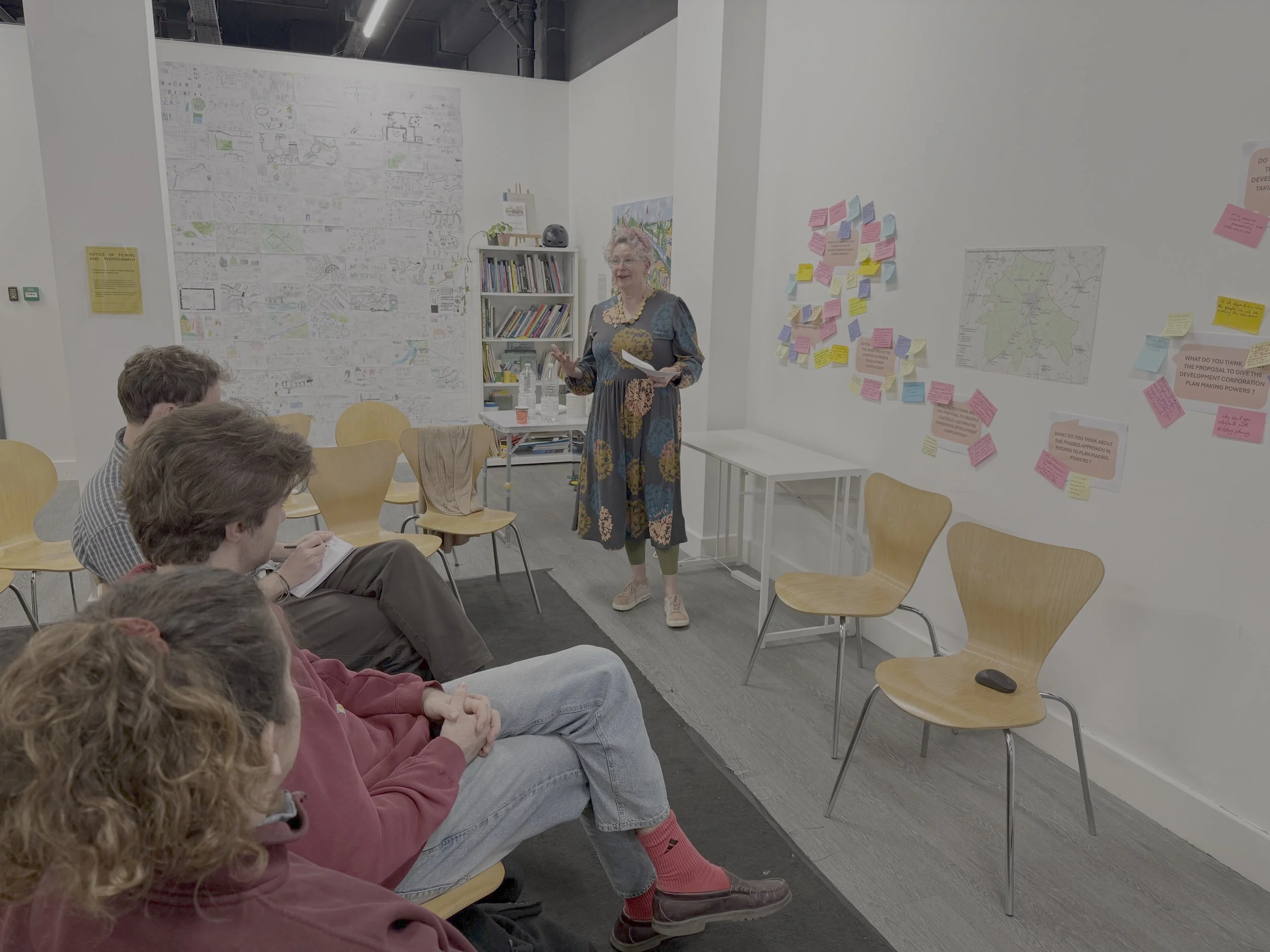
“Engagement has to be as much about listening as telling”- Jo Hobohm
Jo Hobohm is a dedicated volunteer at the Cambridge Room in addition to her extensive architectural experience as a Director of Studio Hobohm. She shared that she welcomes people to the room, asking them about their day and hearing about their experiences in Cambridge. Rather than asking visitors to write down their experiences or launch into discussions specifically about urban planning, Hobohm cultivates a welcoming environment that creates openings for people to discuss what matters to them. That is part of the value of Urban Rooms because they enable conversations to flow freely. This is clearly observed through the “Let’s Talk About It” series, including the sold-out discussion, “Let's Talk About: The Greater Cambridge Development Corporation” on March 4, 2026 chaired by Professor Flora Samuel and featuring speakers Peter Freeman CBE the chair of the Cambridge Growth Company, Beth Dugdale the Deputy Chief Executive of the Cambridge Growth Company, Cllr Dr. Tumi Hawkins from South Cambs District Council, and Cllr Katie Thornburrow from Cambridge City Council. Hobohm also recently hosted a workshop on March 16, 2026, specifically about the development corporation, to make information about the development corporation accessible, foster conversation, and ensure that perspectives are captured in the official consultation process. These events, the visual representations, like the vibrant post-it notes dotted around the room, all allow citizens to dive deeper into what the development corporation is truly proposing and how that will impact people's day-to-day lives. All of these efforts aim to be accessible, inspirational, and based in citizens' power, creating windows of opportunity to cultivate a more sustainable and equitable future.
Next Steps (Ways to get Involved)
● Sign up for the Cambridge Room mailing list to stay up to date on future events and upcoming engagement opportunities https://www.cambridgeroom.org/
● Follow the Greater Cambridge Shared Planning Authority Local Plan Process https://www.greatercambridgeplanning.org/local-plan
● Continue to follow the development corporation consultation response https://www.gov.uk/government/consultations/establishing-a-development-corporation-in-greater-cambridge/establishing-a-development-corporation-in-greater-cambridge